Smarter products

Products rarely fail in the real world for the same reasons they succeed in the lab

NoWatt gives manufacturers twenty years of high-resolution consumption data across thousands of appliances in hundreds of environments. The result is a real-world dataset that helps designers, service providers, and product teams understand how equipment actually behaves after deployment.

20 years of operating history100,000+ devices100bn+ data points10+ sectors

Questions manufacturers bring to us

The conversation usually starts where internal data is weakest: the gap between expected product behaviour and what actually happens across live operating environments.

Is the problem really in the product, or is it coming from installation, settings, and real-world use?
Which patterns in the field quietly increase warranty drag, service effort, and customer frustration?
What does our equipment actually experience after deployment across varied sites, loads, and operators?
Where would smarter diagnostics or product intelligence create the biggest commercial return?

Why manufacturers care

The commercial opportunity lies between the product, its installation, and how the equipment is used

Spotting a fault isn’t enough. Manufacturers need to understand why it happened in the field, how it affects service economics, and how those insights should inform the next product generation.

Field behaviour is wider than most internal datasets

Air conditioning, refrigeration, plant, and other long-running infrastructure see more variation in load, settings, intervention, and misuse after deployment than manufacturers can capture on their own.

Service data rarely isolates the true cause

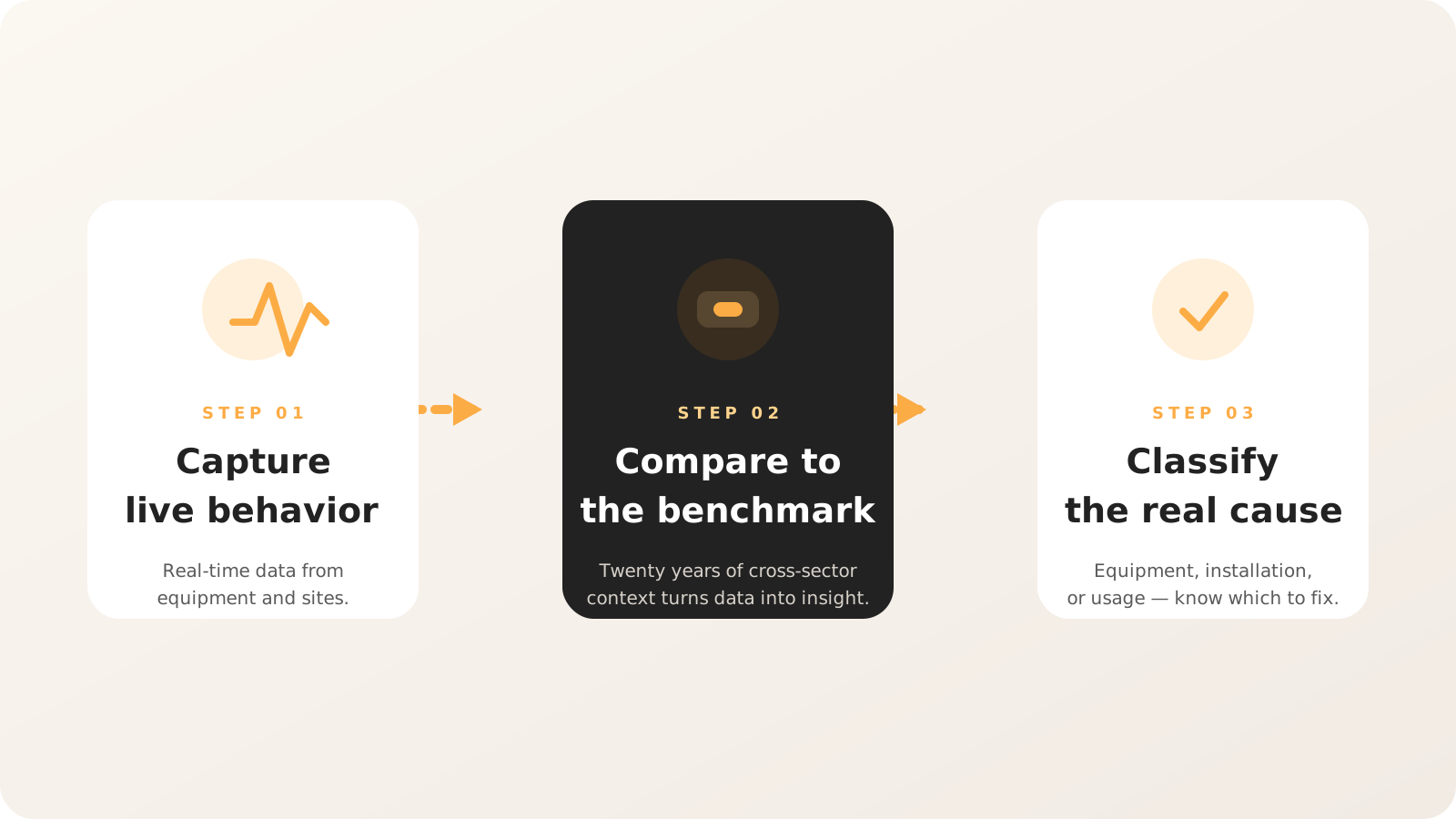
A call-out confirms that something went wrong, but not whether the issue sits in the product, the installation, or the way equipment is being used.

Ownership cost rises before the reason is clear

Settings drift, slow degradation, and poor operating practice can make equipment more expensive to run and support long before anyone can explain why.

Product teams learn too slowly from the field

When evidence stays fragmented across service notes and hearsay, it is harder to decide which design changes or smart features will improve manufacturing and operating economics.

The data asset

A dataset no single manufacturer could build alone

The monitoring history matters because it establishes the dataset’s provenance. For manufacturers, the commercial value lies in that operating history: how equipment behaves across sectors, loads, settings, intervention patterns, and long-term drift in the real world.

How NoWatt built and applies its real-world dataset
Twenty years of operating history from live environments, not short test windows or a single manufacturer's installed base.
Cross-sector exposure across hospitality, education, manufacturing, logistics, retail, facilities, sports venues, ...
Human behaviour included: settings changes, misuse, intervention patterns, seasonal drift, and installation failings.
A comparative dataset large enough to explain how products actually behave after deployment across varied operating conditions.
See the data asset in detail →


Applications

What operating history helps manufacturers do

The value is not abstract. The dataset becomes commercially useful when it improves product performance, reduces avoidable service disruption, and lowers cost of ownership.

Build smarter equipment

Train products, diagnostics, and product logic on real operating behaviour rather than idealised assumptions from controlled conditions.

Reduce avoidable service and warranty waste

Separate likely product faults from installation and usage issues earlier, so engineering attention goes to the right problem first.

Lower the total cost of ownership

Use field evidence to address the patterns that drive inefficiency, callbacks, and support burden for end users.

Proof

Proof that the benchmark reflects live operating environments

The dataset wasn’t assembled in a lab or a demo. It was built through live deployments across multiple sectors, estates, and operating conditions over two decades. This video shows how incoming data is interpreted against that broader benchmark.

Mitchells & Butlers

NoWatt helps us to make educated decisions on which energy reduction projects will provide the greatest financial benefits.

Richard Felgate
Head of Energy Management, Mitchells & Butlers
Pizza Hut

Pizza Hut is keen to implement affordable energy-saving tools such as NoWatt, and works with AECOM to achieve this.

Raefe Watkin-Rees
Commercial Director, Pizza Hut (UK) Ltd.
Sheffield United

The information from ECA and NoWatt is spot on, and essential for clubs like us.

Steve Hicks
Head of Estates, Sheffield United Football Club

Partnership

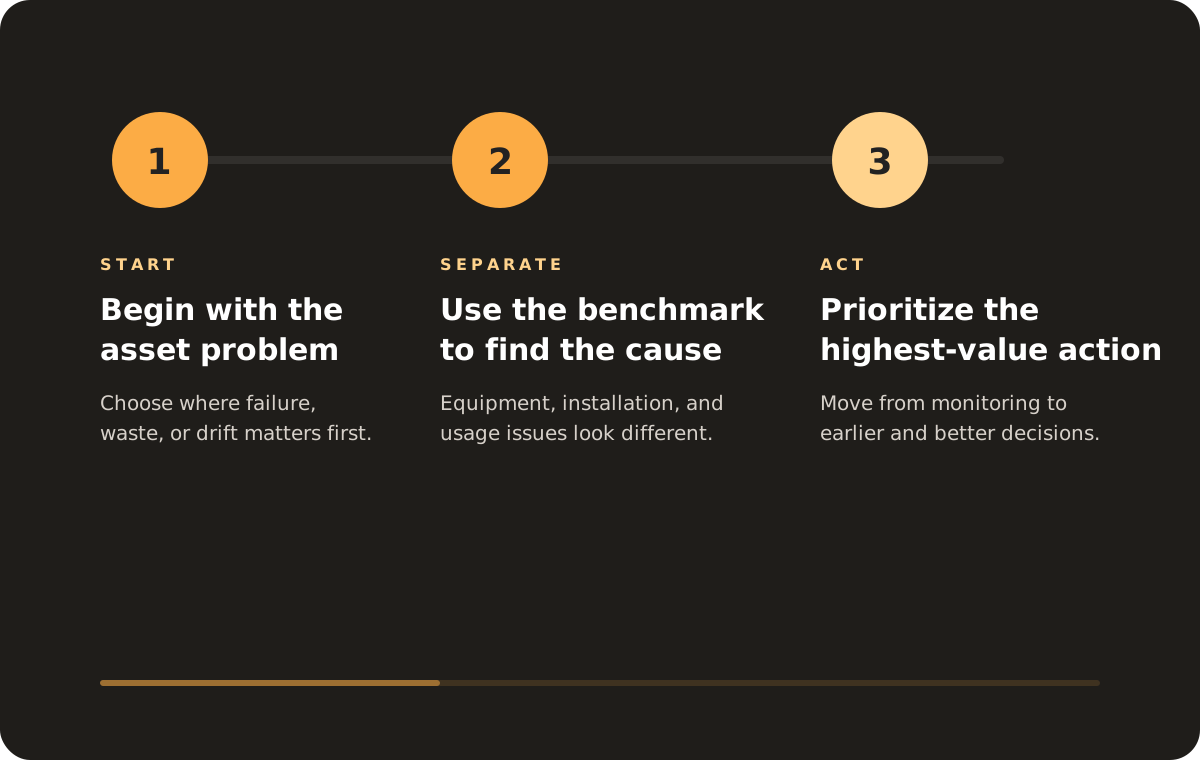
Start with the product category and field question that matters most

The first conversation is usually about the equipment category, the installed-base behaviour that is hardest to explain, and whether operating-history data could create a practical commercial advantage.

From manufacturer problem to dataset application

Useful if you are

Working on smarter products, lower service friction, or lower ownership cost across appliance and infrastructure.

Typical starting point

Product behaviour in the field, recurring service drag, or the question you cannot answer well enough with internal data.

Contact

sales@nowatt.com
+44 7873 124107